
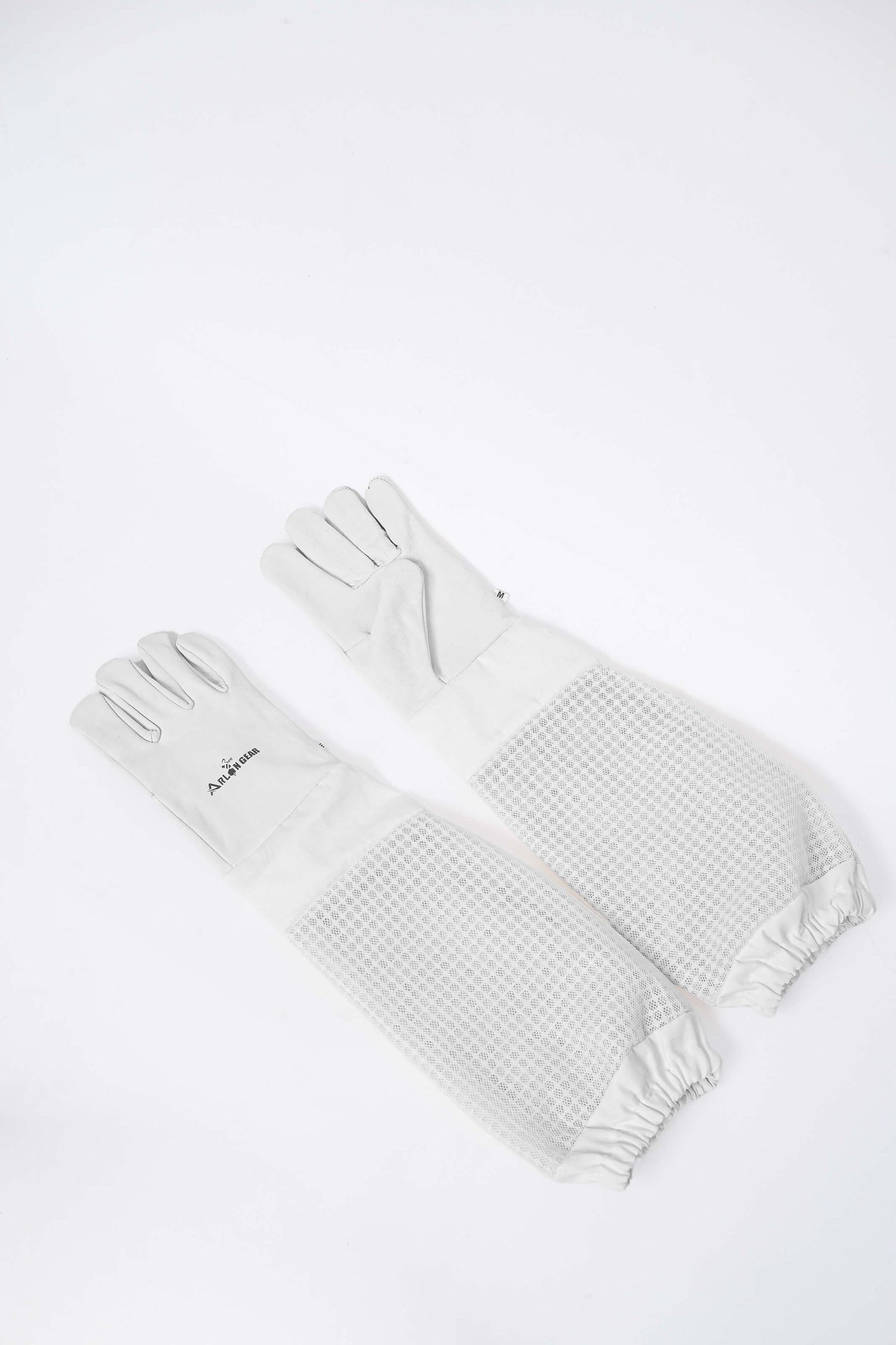
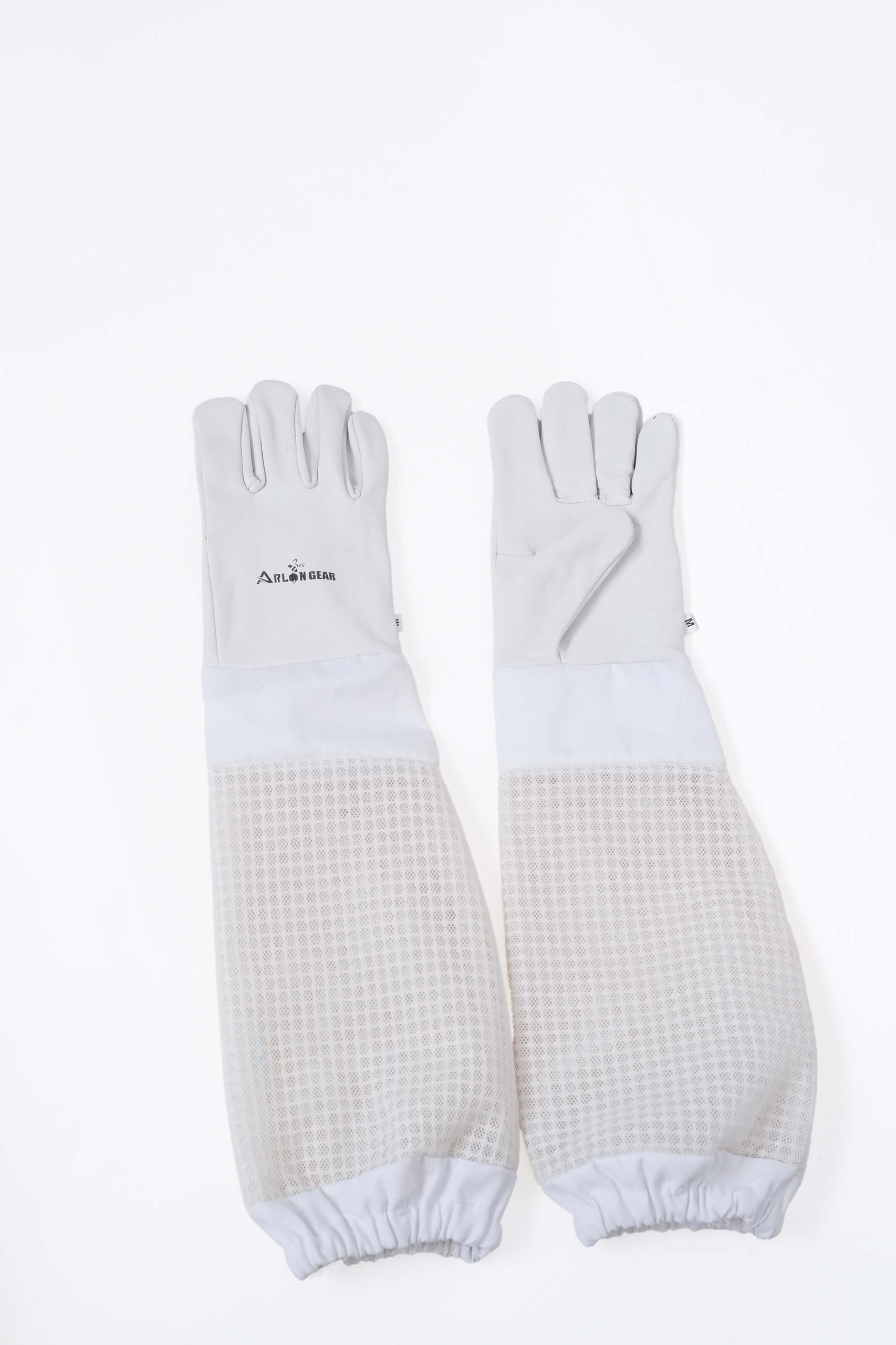
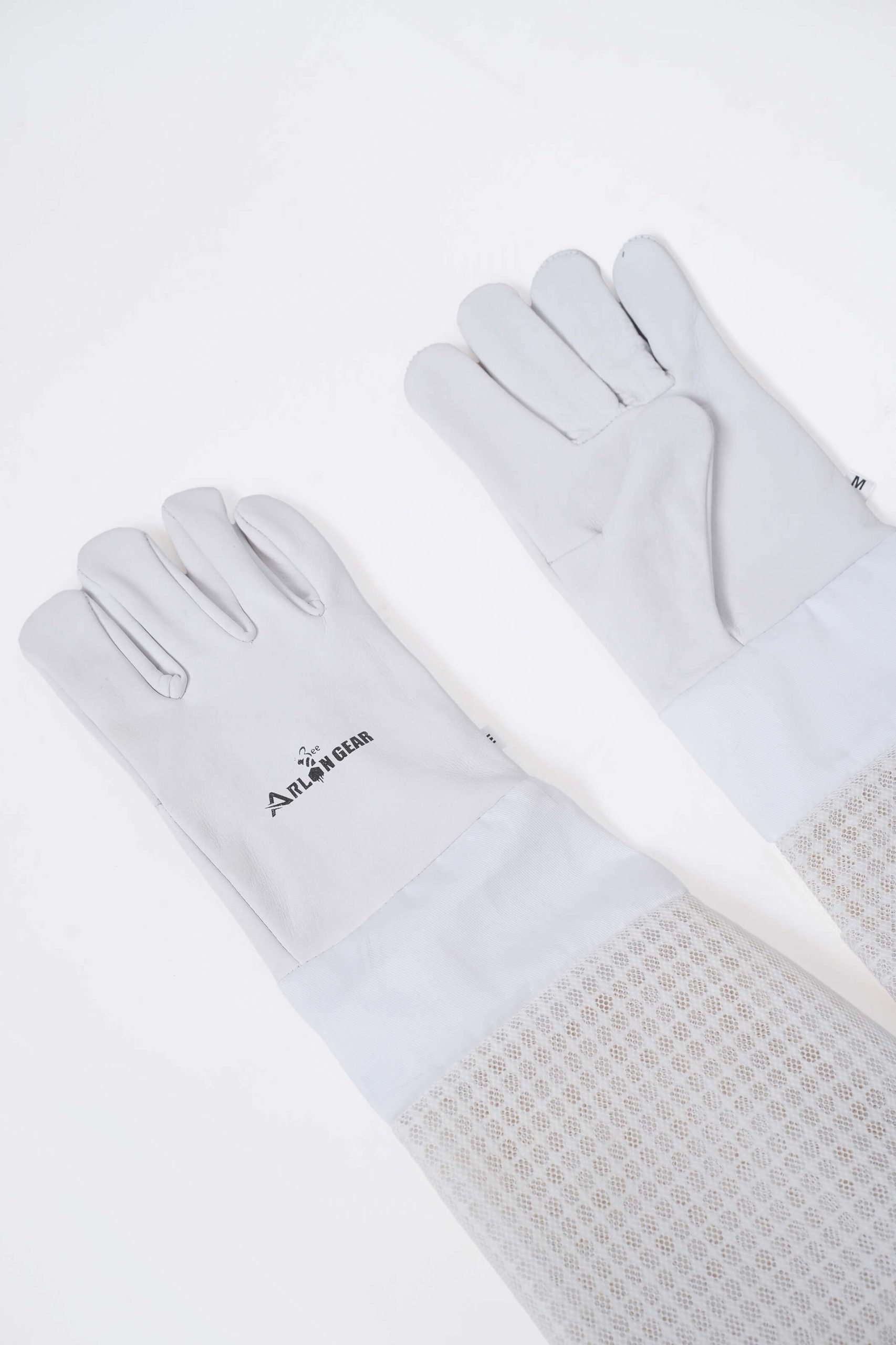
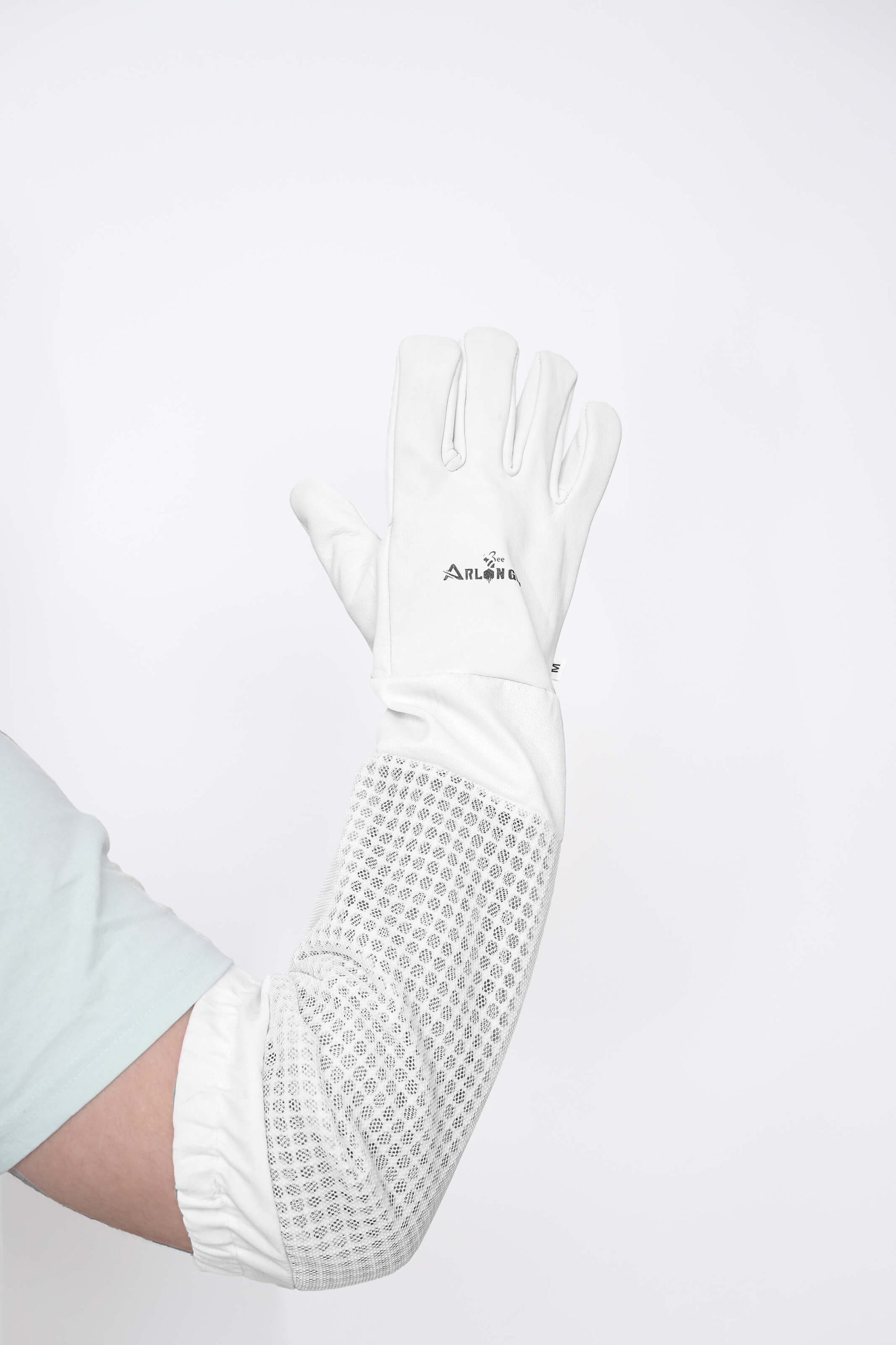
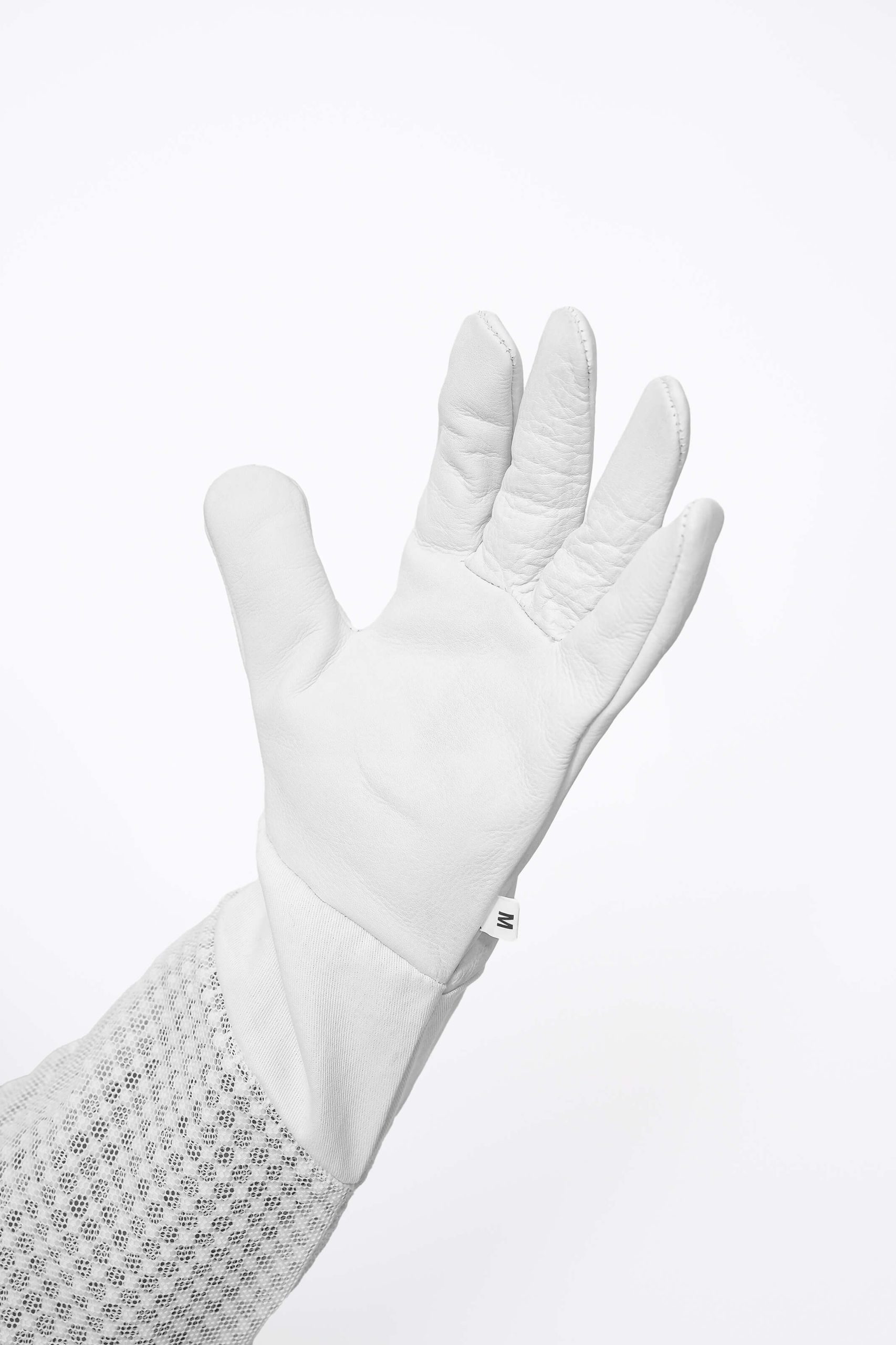
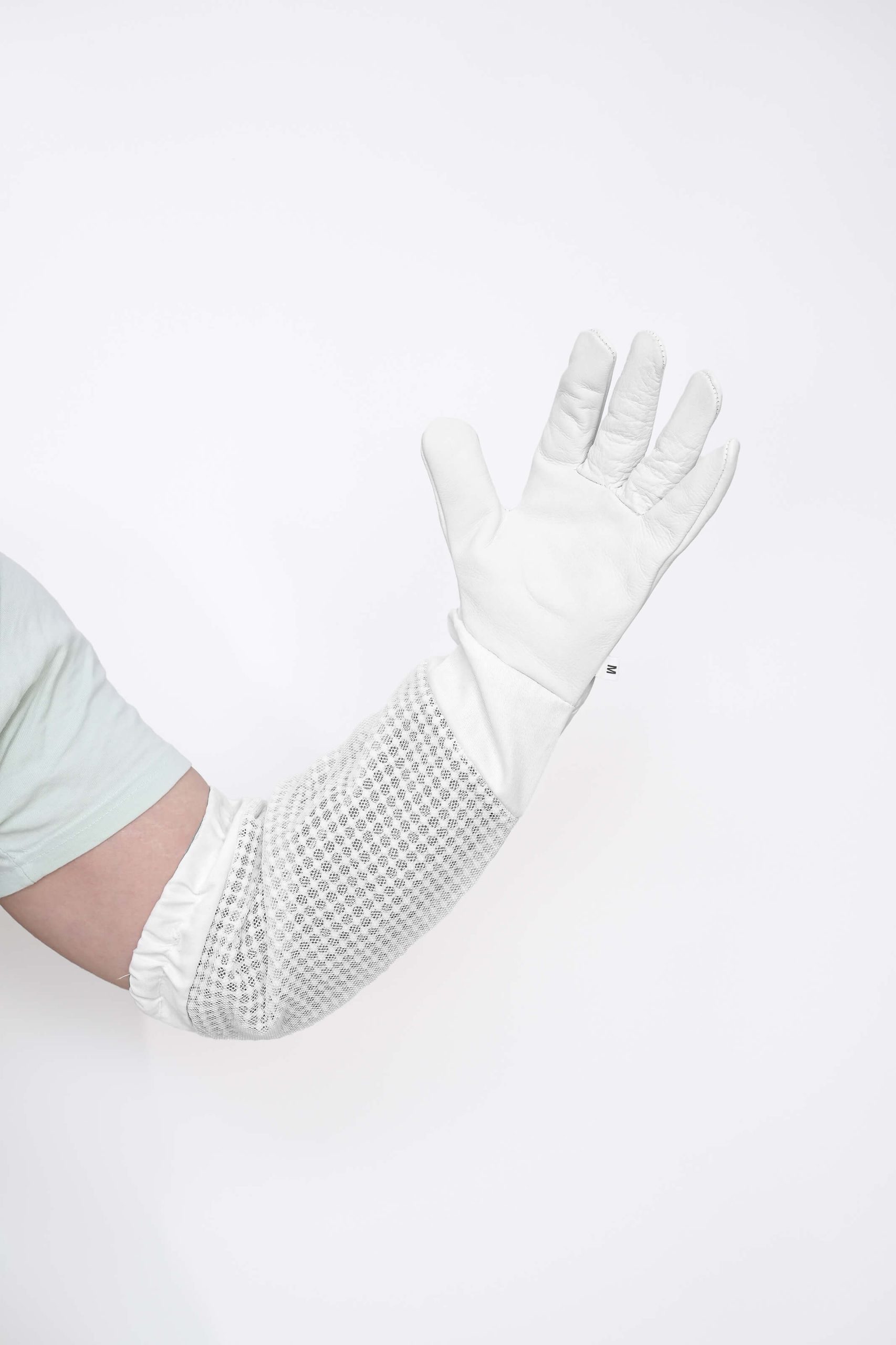
Cowhide Leather Ultra-Ventilated 3-Layer Beekeeping Gloves | White Sting-Proof Gloves
Material & Sting Resistance
Leather (goatskin or cowhide) is common because it offers good resistance to bee stings.
Multi-layer construction (3-layer or more) increases sting resistance.
While no glove is “sting-proof”, thicker or better-designed materials reduce risk.
Extended Coverage (Gauntlet/Sleeve Length)
Gloves that extend up the forearm (even to the elbow) help prevent bees crawling in or finding gaps between sleeve and cuff.
Elastic or secure cuff at the top of the gauntlet adds protection.
Fit & Dexterity
Good fit is crucial: too loose = more chance of bees getting inside or hand movement causing vulnerability; too tight = less comfort or reduced movement.
For tasks that require fine manipulation (like handling frames or queen cells), you’ll want gloves that balance protection with dexterity.
Ventilation / Comfort
Working in hives can get hot & sweaty. Ventilation (mesh panels, breathable materials) helps keep hands cooler and less fatigued.
However: more ventilation can mean slightly less sting-protection in very defensive hive situations. It’s a trade-off.
Durability & Ease of Maintenance
Strong stitching, reinforced palms/back, quality leather or fabric means the gloves will last.
Materials should be cleanable (propolis, wax and debris build up in hive work).
Visibility & Color (lesser but worth noting)
Lighter colors tend to be less triggering for bees (dark clothing can trigger defensive behavior). While this applies more to suits and veil, gloves are part of the system.
Also, long cuffs should fit over/under your bee suit sleeve so there are no gaps.
Reviews
There are no reviews yet.